

When a speaker produces sound, many people may assume that the sound only comes from the front of the diaphragm. In fact, as the diaphragm moves back and forth, it not only pushes the air in front of it, but also creates air movement and sound behind it.The problem is that the sound waves produced by the front and rear sides of the diaphragm are usually out of phase. In other words, when the front side of the diaphragm is compressing the air, the rear side may be creating the opposite air movement. If the front and rear sounds meet each other, they may cancel out, reducing sound output. This effect is especially noticeable in the low-frequency range.To reduce this cancellation between the front and rear sound waves, a baffle can theoretically be added around the speaker driver to separate the sound from the front and rear sides of the diaphragm. If the baffle is large enough, the rear sound wave is less likely to wrap around to the front and cancel the front sound wave.
In an ideal case, the baffle can be considered infinitely large, which is known as an infinite baffle. Under this condition, the front and rear sound waves of the speaker can be effectively separated. The rear sound wave will not diffract around to the front, helping to reduce low-frequency loss caused by phase cancellation.
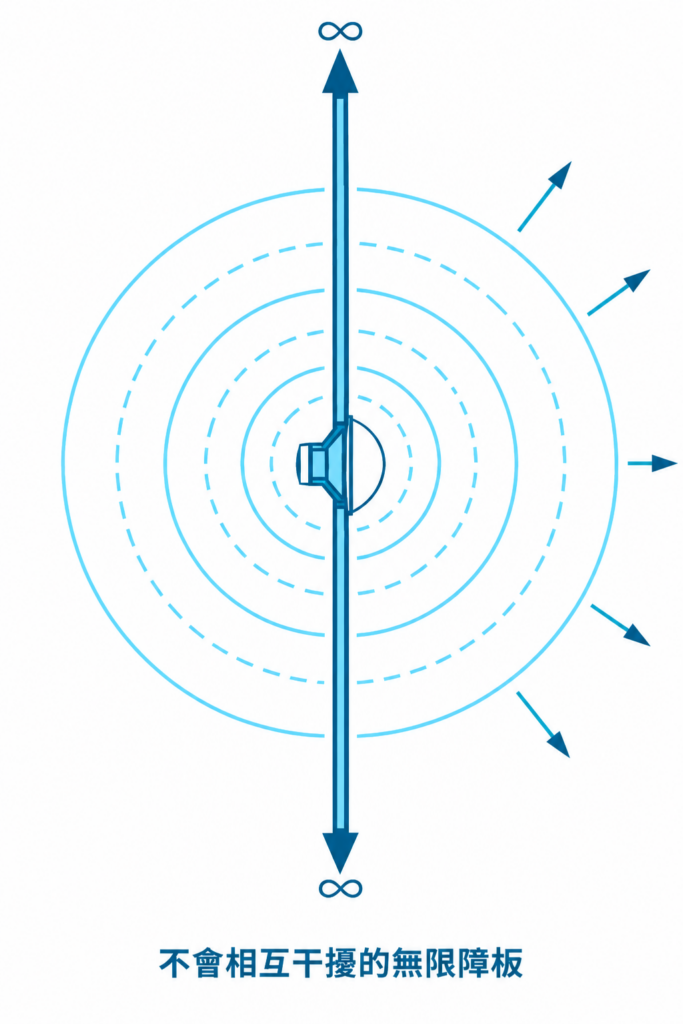
However, in real products, it is impossible to build a truly infinite baffle. Therefore, when using a baffle with a limited size, the baffle dimension is usually expected to be comparable to the wavelength of the sound in order to effectively reduce diffraction and cancellation between the front and rear sound waves.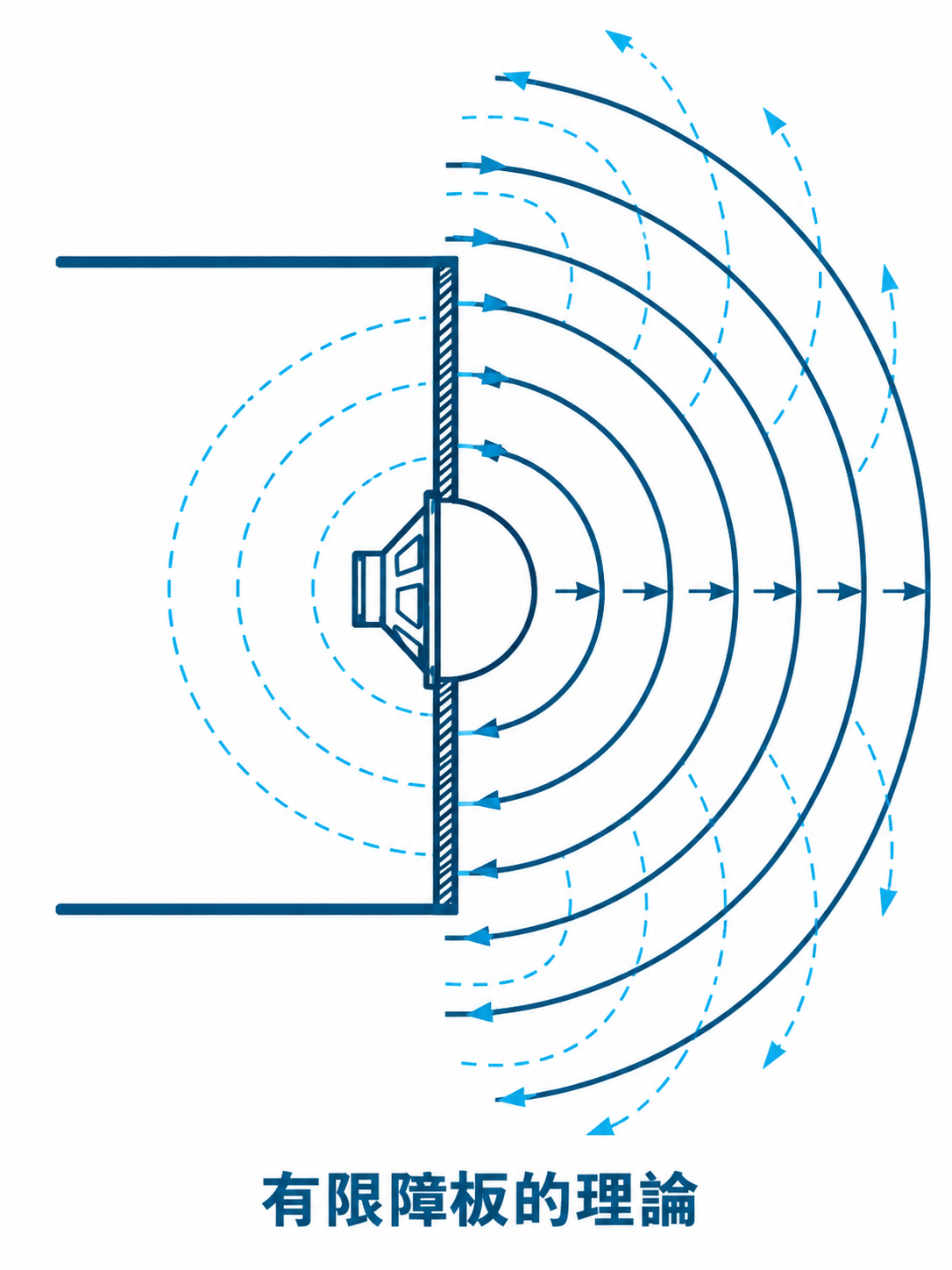
Therefore, in low-frequency or larger speaker applications, a common solution is to install the speaker in an enclosure. The enclosure separates the air behind the diaphragm from the outside environment. This prevents the rear sound wave from directly wrapping around to the front and reduces cancellation with the front sound wave. One common design is the sealed enclosure. A sealed enclosure keeps the air behind the speaker diaphragm enclosed inside the cabinet, so the sound generated from the rear side does not directly radiate outward. In this way, the sound output from the front of the speaker becomes more stable, and the low-frequency performance can be improved.
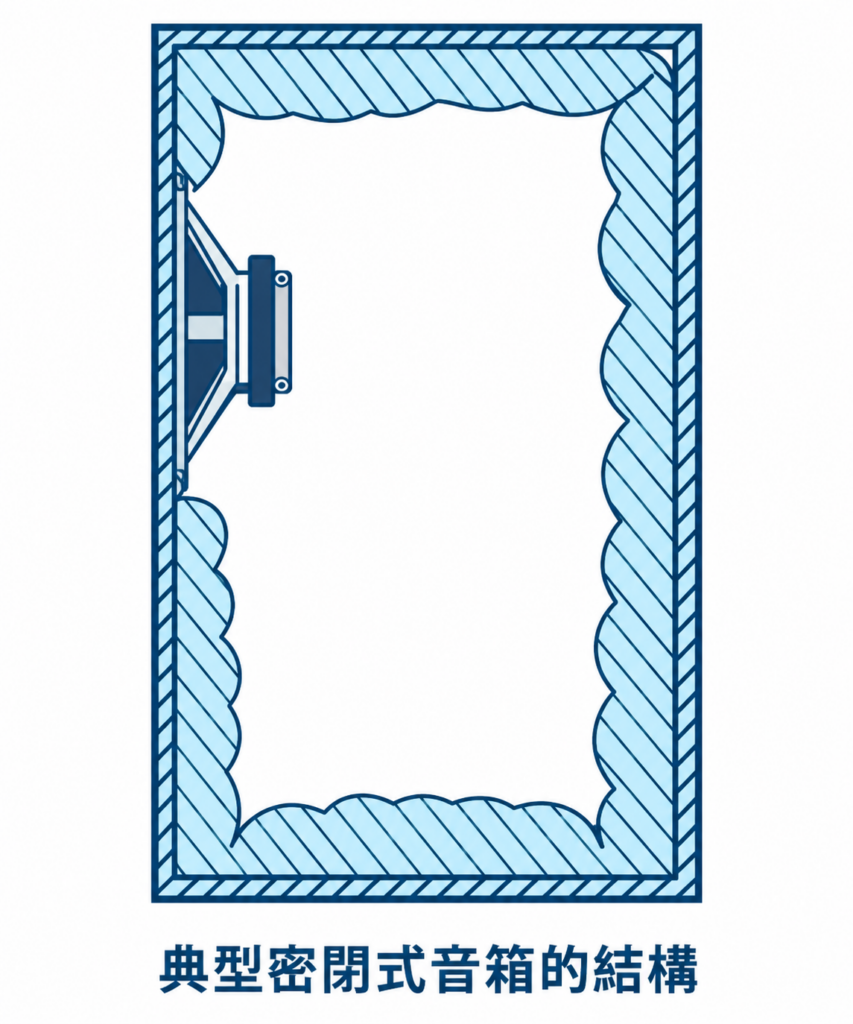
Simply put, a speaker enclosure is not just a housing for mounting the speaker. It also plays an important acoustic role. For low-frequency speakers, the enclosure helps separate the sound waves from the front and rear sides of the diaphragm, reduces phase cancellation, and allows the speaker to produce sound more efficiently. This is why many large speakers, especially low-frequency speakers, usually need to be used with an enclosure.