

A buzzer is a common sound-generating component.It is widely used in home appliances, electronic devices, warning equipment, instrument panels, and many other products. It is mainly used to provide notification sounds, warning sounds, or operation feedback sounds. Based on different sound-generating principles, buzzers can generally be divided into two types: piezoelectric buzzers and electromagnetic buzzers. This article first introduces piezoelectric buzzers. The core component of a piezoelectric buzzer is the piezo-ceramic element. This type of component requires an AC signal to drive continuous vibration and generate sound. Therefore, depending on whether the product already includes an oscillation circuit inside,piezoelectric buzzers can be further divided into self-drive buzzers and external-drive buzzers. A self-drive buzzer is also known as an active buzzer. In English, it is commonly called a Self-drive buzzer or an Indicator. This type of buzzer already includes an oscillation circuit inside. Therefore, when in use, it only needs to be connected to a DC power supply. The internal circuit will then generate the driving signal by itself and make the buzzer produce sound. An external-drive buzzer is also known as a passive buzzer. In English, it is commonly called an External-drive buzzer or a Transducer.
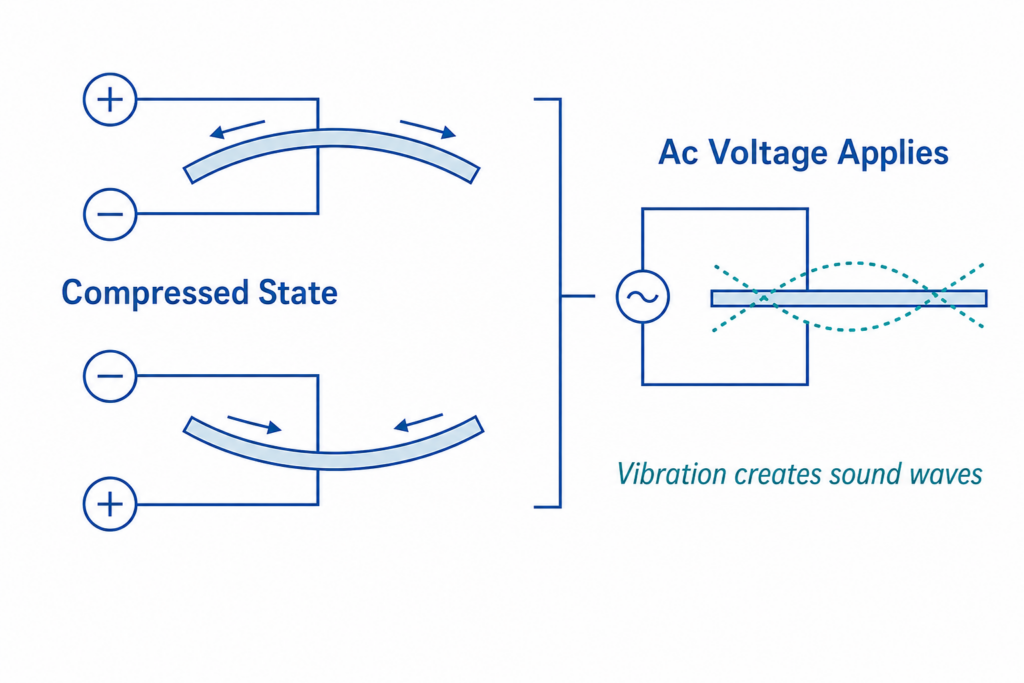
 This type of product usually only contains the buzzer unit and does not include a built-in oscillation circuit. Therefore, it needs an external circuit to provide an AC driving signal in order to make the buzzer produce sound. When a piezoelectric buzzer produces sound, the driving circuit applies a continuously changing voltage to the piezo-ceramic element. As the polarity and magnitude of the voltage change, the piezo-ceramic element produces the inverse piezoelectric effect, causing small deformation in the material. When this deformation moves back and forth rapidly and continuously, it drives the surrounding air to vibrate, producing sound that can be heard by the human ear. Simply put, a piezoelectric buzzer uses voltage changes to make the piezo-ceramic element deform repeatedly. Through this vibration process, the electronic signal is converted into sound.
 Next, we introduce the electromagnetic buzzer. Its working process is as follows:
 The diaphragm of the buzzer is a magnetized iron plate, also called a ferromagnetic plate.
It is magnetized by the magnets on both sides and forms fixed magnetic poles.
The iron plate moves due to the effect of the driving voltage Vp-0. The direction of this action can be determined by Ampere’s right-hand grip rule. Assuming the driving voltage is V0-p, the voice coil of the electromagnetic buzzer mainly has two states: The first state is the zero-voltage state, V0. At this time, the voice coil is not energized, the core does not generate magnetism, and the ferromagnetic plate remains in its original natural position. The second state is when the voice coil is energized, Vp. The core generates magnetism and attracts the iron plate toward the core, causing the iron plate to move downward. If the side of the iron plate facing the core is induced as a north pole, then in order to move the iron plate downward, the end of the core near the iron plate must be induced as a south pole. This induced direction can be controlled by the direction of the current. This means that polarity is very important. If the polarity is reversed, the movement of the iron plate may change from being “attracted” to being “repelled.” Some customers are limited by the overall circuit design and can only provide a Vp-p signal to drive the electromagnetic buzzer. In this case, the iron plate can be imagined as a diaphragm being pulled back and forth repeatedly. As a result, there is no longer a zero-voltage stationary state. Therefore, when choosing between Vp-0 and V0-p as the driving signal for the buzzer, the Fo, or resonant frequency, of the electromagnetic buzzer often changes as well.This is an important point that both manufacturers and customers need to pay special attention to during design and application.
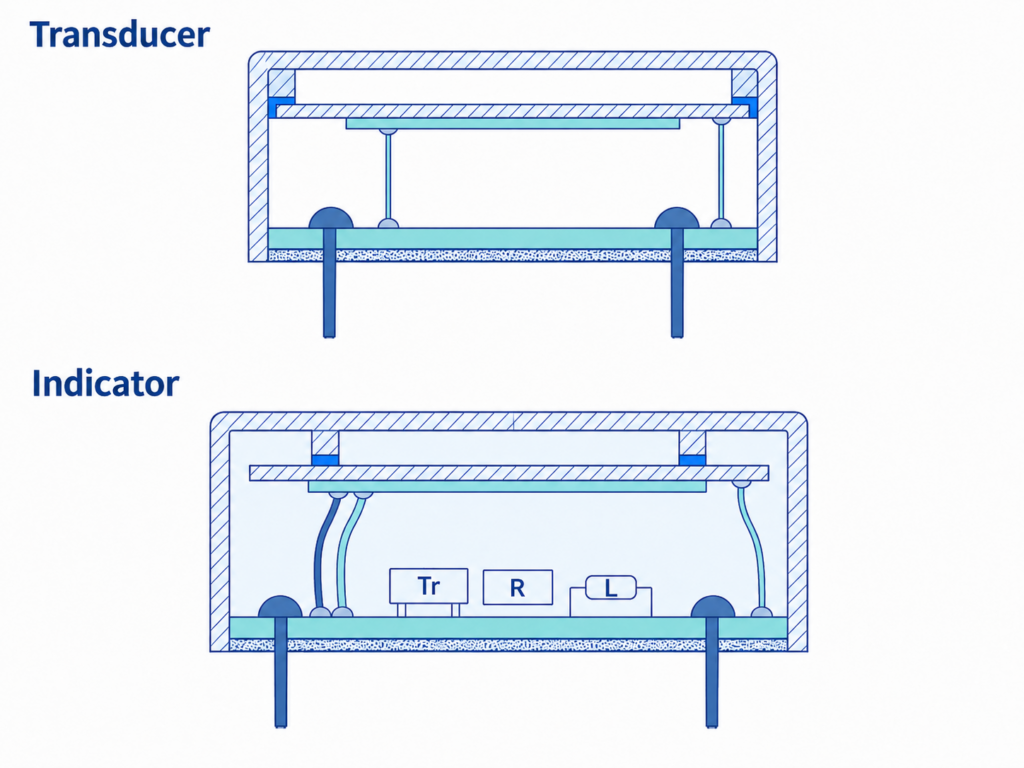 This type of product usually only contains the buzzer unit and does not include a built-in oscillation circuit. Therefore, it needs an external circuit to provide an AC driving signal in order to make the buzzer produce sound. When a piezoelectric buzzer produces sound, the driving circuit applies a continuously changing voltage to the piezo-ceramic element. As the polarity and magnitude of the voltage change, the piezo-ceramic element produces the inverse piezoelectric effect, causing small deformation in the material. When this deformation moves back and forth rapidly and continuously, it drives the surrounding air to vibrate, producing sound that can be heard by the human ear. Simply put, a piezoelectric buzzer uses voltage changes to make the piezo-ceramic element deform repeatedly. Through this vibration process, the electronic signal is converted into sound.
 Next, we introduce the electromagnetic buzzer. Its working process is as follows:
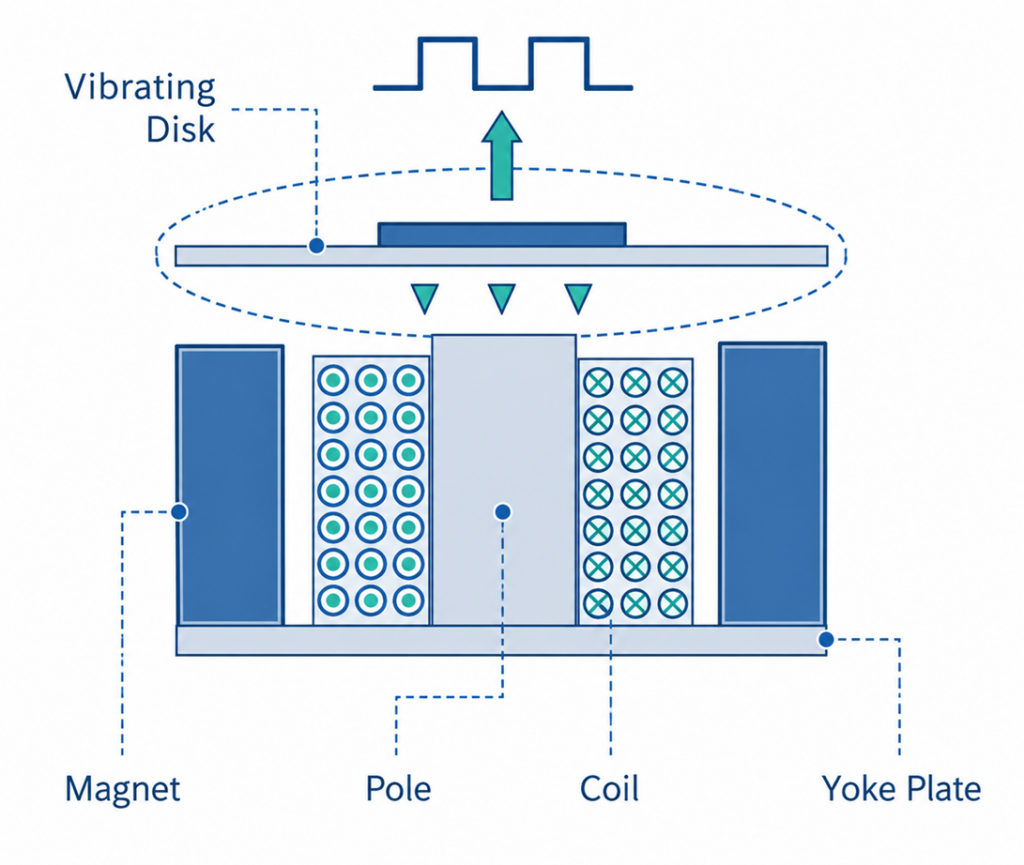 The diaphragm of the buzzer is a magnetized iron plate, also called a ferromagnetic plate.
It is magnetized by the magnets on both sides and forms fixed magnetic poles.
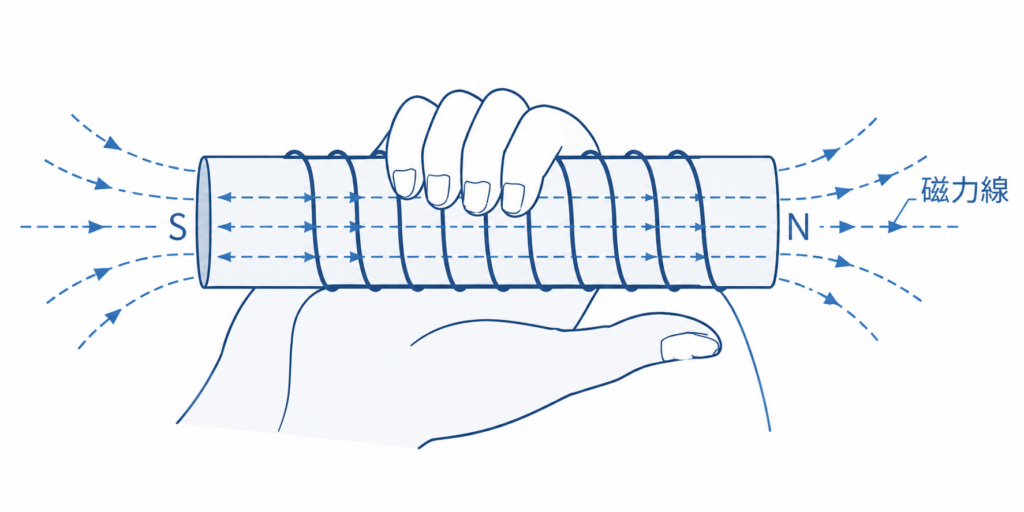
The iron plate moves due to the effect of the driving voltage Vp-0. The direction of this action can be determined by Ampere’s right-hand grip rule. Assuming the driving voltage is V0-p, the voice coil of the electromagnetic buzzer mainly has two states: The first state is the zero-voltage state, V0. At this time, the voice coil is not energized, the core does not generate magnetism, and the ferromagnetic plate remains in its original natural position. The second state is when the voice coil is energized, Vp. The core generates magnetism and attracts the iron plate toward the core, causing the iron plate to move downward. If the side of the iron plate facing the core is induced as a north pole, then in order to move the iron plate downward, the end of the core near the iron plate must be induced as a south pole. This induced direction can be controlled by the direction of the current. This means that polarity is very important. If the polarity is reversed, the movement of the iron plate may change from being “attracted” to being “repelled.” Some customers are limited by the overall circuit design and can only provide a Vp-p signal to drive the electromagnetic buzzer. In this case, the iron plate can be imagined as a diaphragm being pulled back and forth repeatedly. As a result, there is no longer a zero-voltage stationary state. Therefore, when choosing between Vp-0 and V0-p as the driving signal for the buzzer, the Fo, or resonant frequency, of the electromagnetic buzzer often changes as well.This is an important point that both manufacturers and customers need to pay special attention to during design and application.